

When it comes to understanding stroke, the Stroke Foundation explains that “a stroke happens when blood cannot get to your brain, because of a blocked or burst artery. As a result, your brain cells die due to a lack of oxygen and nutrients” (Stroke Foundation, 2025). Stroke has a different effect on each person, and it can happen to anyone no matter their age, however, men are at greater risk and this increases as they get older. The effects of a stroke can differ based on which area of the brain it harms. From this damage to the brain, it can affect multiple activities of daily living, such as the way you think, speak, and behave. With this week being National Stroke Week, we at Ability Partners wanted to focus on understanding stroke – including its risk factors, recovery, and prevention.
There are two types of stroke, however, they both inhibit blood from getting to areas of the brain. There is an ischaemic stroke which is “a stroke can be caused by the blood supply being blocked” (Stroke Foundation, 2025). This type of stroke is the most common and the blood supply is typically blocked due to a blood clot. And there is also a haemorrhagic stroke, which is “a stroke can be caused by bleeding” (Stroke Foundation, 2025). Here, the bleeding can be caused from a leak from a blood vessel that has burst or is broken. This blood that is leaking resembles a bruise that can harm the brain.
Signs of a Stroke: FAST
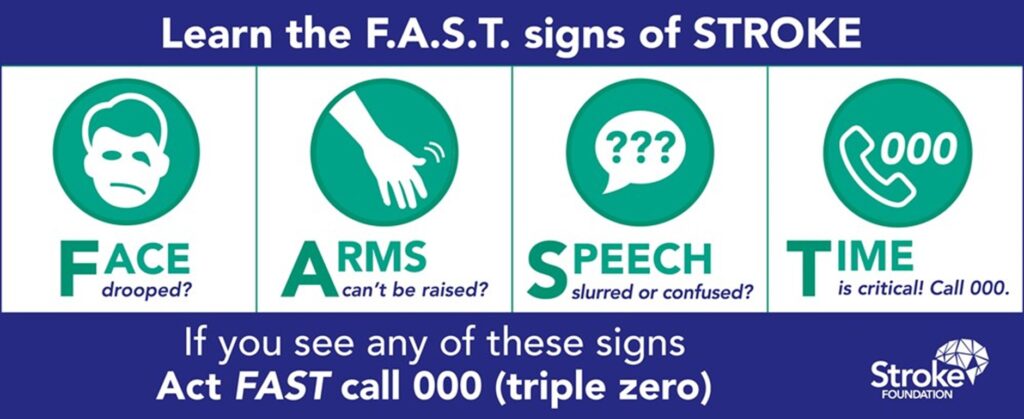
According to The Stroke Foundation, the F.A.S.T test is a simple way to understand signs and symptoms of a stroke.
Face: Is their face/mouth drooped?
Arms: Can their arms be raised?
Speech: Are they confused, or do they have slurred speech? Can they understand you?
Time: If you notice these signs, call 000 immediately as time is critical.
Risk Factors
- High blood pressure – this is a major risk factor for haemorrhagic strokes, as high blood pressure can harm the walls of blood vessels, leading to clots and blockages.
- Type 2 diabetes – like high blood pressure, Type 2 diabetes can cause clots in blood vessels as well as fatty deposits.
- Irregular heartbeat/pulse – this can result in slow and inactive blood flow to the heart which inherently can trigger a clot that reaches the brain.
- High cholesterol – this can also cause a clot through the build-up of plaque in the arteries which as a result narrows the artery.
- Poor diet, physical inactivity and obesity – your diet and the amount of physical activity you undertake can have a major effect on the risk factors previously listed. These can affect your cholesterol, heart, blood pressure and type 2 diabetes.
- Smoking – smoking can increase the risk of blood clotting, as well as damage blood vessel walls, making your risk of stroke increase by double.
Recovery
Understanding stroke is essential, as recovery can look different for each individual. In rehabilitation, you will undertake a variety of different activities and therapy to help you through recovery. These will help you to re-learn or find alternative ways to do certain tasks or everyday activities that were affected from the stroke. For example, rehabilitation will have a distinct focus on Activities of Daily Living, such as preparing food, getting ready, and bathing.
Some activities that can help and assist in recovery include:
- Motor-skill exercises – can help to better muscle strength and coordination.
- Mobility training – this may involve using a variety of devices and aids to assist in re-learning to walk. For example, a cane, wheelchair or walker.
- Constraint-induced therapy – if you have a limb that has not been affected by the stroke, this form of therapy restrains this limb so you can practice using your affected limb and improve its function.
- Range-of-motion therapy – a variety of exercises that help to relieve muscle tension which can assist in recovering range of motion.
- Cognitive symptoms therapy – to improve cognitive abilities that may have declined due to stroke, such as memory, social skills, judgement and awareness, OT and speech therapy can be beneficial.
- Therapy to aid communication – speech therapy can be particularly helpful in regaining communication skills such speaking and writing.
- Psychological support and/or treatment – extra support may be beneficial to have during recovery, due to the toll rehabilitation can take. Engaging in counselling or a support group could be valuable during this time.
Throughout your rehabilitation, you may be supported by a variety of health professionals including nurses, OTs, neurologists, and speech pathologists.
EDNA
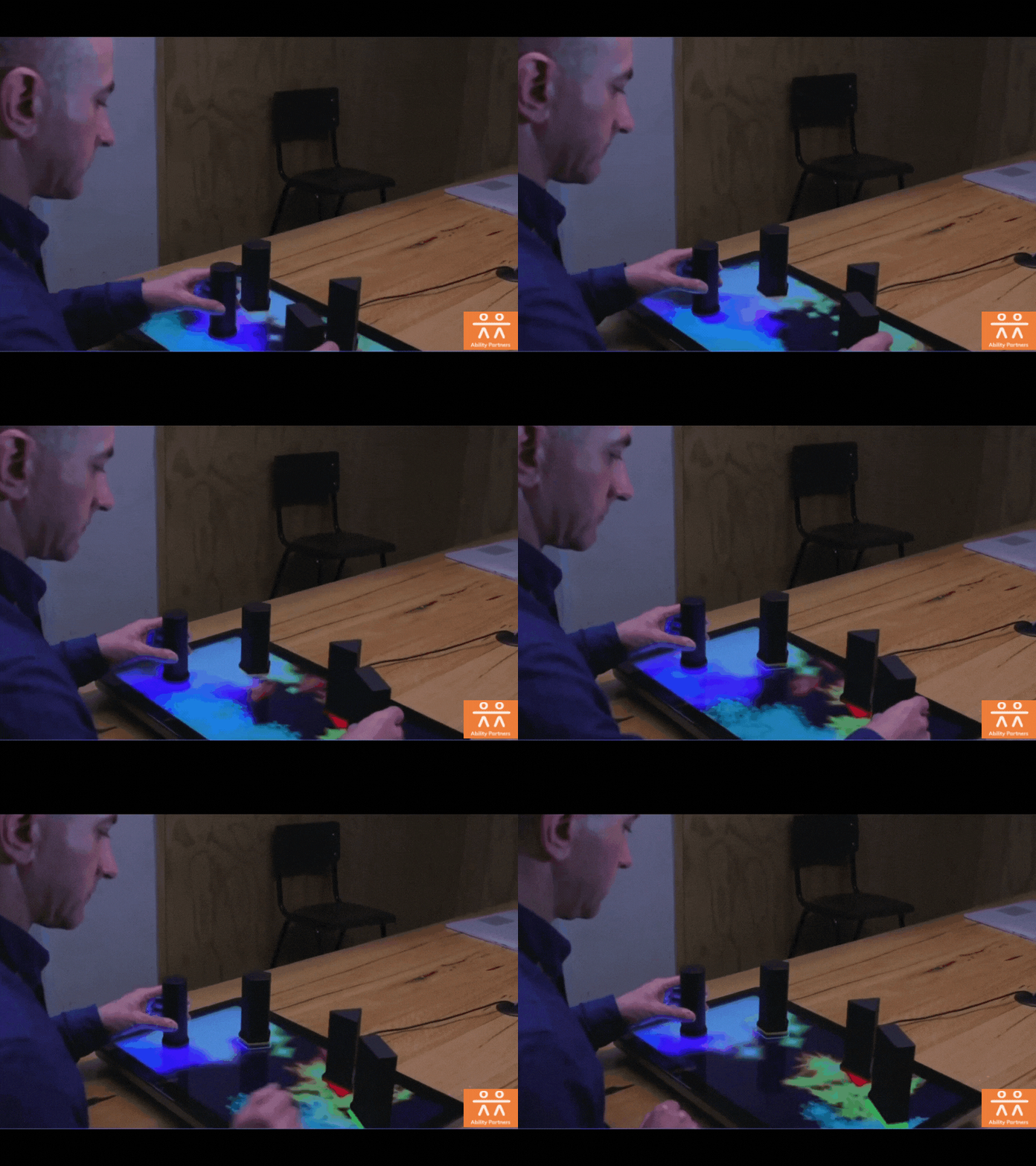
At Ability Partners we are committed to supporting stroke recovery and understanding stroke, therefore we offer a type of therapy called EDNA, or Elements by Dynamic Neural Arts that uses cutting edge technology to rehabilitate your upper limb function.
EDNA is therapy made interactive. The game-like software tasks, tangible and graspable tools, and augmented feedback improve your motor function and cognitive skills. In clinical trials, EDNA has been shown to be improve upper-limb and cognitive function more than standard therapies, even over short periods of use.
It is a highly innovative software for stroke survivors and can have an amazing impact in one’s recovery process.
Prevention
Understanding stroke also involves knowing how to prevent it, there are multiple ways to reduce your risk. Prevention starts by addressing the risk factors mentioned earlier in this blog, whether this involves seeing your GP to check in on these things or just simply making some healthy lifestyle changes. Some simple steps you can start taking now include:
- Eat healthy.
- Keep active.
- Remain a healthy weight.
- Quit smoking.
- Avoid alcohol.
- See your GP for a health check.
- Check blood pressure.
- Check cholesterol.
- Type 2 diabetes.
- Check for irregular pulse.
We at Ability Partners are here to help and support you in your recovery. We have an excellent team of experienced therapists who work in stroke recovery and are ready to assist you through this process. Feel free to contact our friendly support team on 1800 AP NDIS (1800 27 6347) or email enquiries@abilitypartners.com.au.
If you enjoyed this blog on ‘Understanding Stoke: Risk Factors, Recovery and Prevention’, you may be interested in: